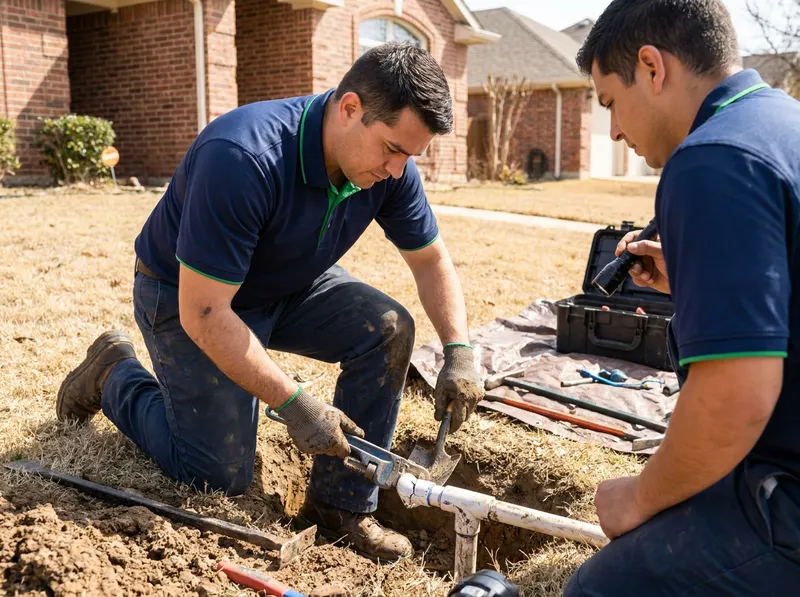
A leak shows up in three main places on a Dallas system, and each is fixed differently. The most common is a cracked or geyser-like spray head, often snapped by a mower or edger along a Lakewood curb strip or clipped…
A leak shows up in three main places on a Dallas system, and each is fixed differently. The most common is a cracked or geyser-like spray head, often snapped by a mower or edger along a Lakewood curb strip or clipped by foot traffic near an M Streets driveway. The second is a split lateral or mainline pipe underground, Dallas sits on expansive Blackland clay soil that shrinks in drought and swells after rain, and that seasonal movement shears PVC fittings, especially in older Oak Cliff and Kessler Park yards where the pipe is decades old. The third is a leaking valve or a backflow preventer that keeps weeping after the zone shuts off. Backflow assemblies protect the drinking supply and are regulated under the Texas Commission on Environmental Quality's backflow prevention rules; a leaking assembly is both a water-waste and a cross-connection concern.
Finding a leak fast matters because water follows the path of least resistance and can travel far from the break. A soggy patch in a Preston Hollow bed may be fed by a fitting six feet away. Our team isolates each zone at the controller, watches which one drops pressure or floods, then exposes only the failed section rather than trenching the whole run. A cracked head is unscrewed and replaced in minutes. A split lateral gets the damaged span cut out and a new coupling glued in; PVC solvent-weld joints need roughly 30 minutes to cure before the zone is pressurized again. Ongoing drought means Dallas often sits under watering restrictions posted by Dallas Water Utilities, so fixing a leak also keeps a yard compliant with the current 2-day-a-week schedule.
Decision guidance on what to fix versus replace: if a single head cracked but the rest of the zone holds pressure, a one-part swap is the right call and the cheapest path. If two or three heads on the same zone are leaking at the seals, replacing all of them at once avoids repeat trip charges. If a lateral line splits in one spot, a coupling repair is enough; if the same run has failed three or four times from clay movement, re-routing or re-piping that stretch is the more durable fix even though it costs more upfront. For a controller that won't shut a valve off, a different failure that mimics a leak, that is a valve or wiring issue rather than a pipe repair.
A leak is not the same as a zone that simply won't turn on, and it is not sprinkler winterization. Leak repair addresses water actively escaping a pressurized or partially open system. The U.S. EPA WaterSense program estimates the average U.S. household loses about 10,000 gallons a year to leaks across plumbing and irrigation, and a broken irrigation head is one of the largest single sources. Standing water also matters for mosquitoes; the CDC recommends eliminating standing water, which a chronic sprinkler leak in a White Rock or Vickery Meadow yard quietly recreates every cycle.
Every job gets a firm, written price after a free on-site visit.
Tell us about your sprinkler leak repair job in Dallas and we'll send a clear, written quote, usually the same day.
 Dallas Green Sprinkler Repair