The most common Dallas failure is a freeze split. Backflow assemblies sit above ground on the side of the house, and a January hard freeze, the kind that hits Lakewood and Casa Linda near White Rock Lake every couple…
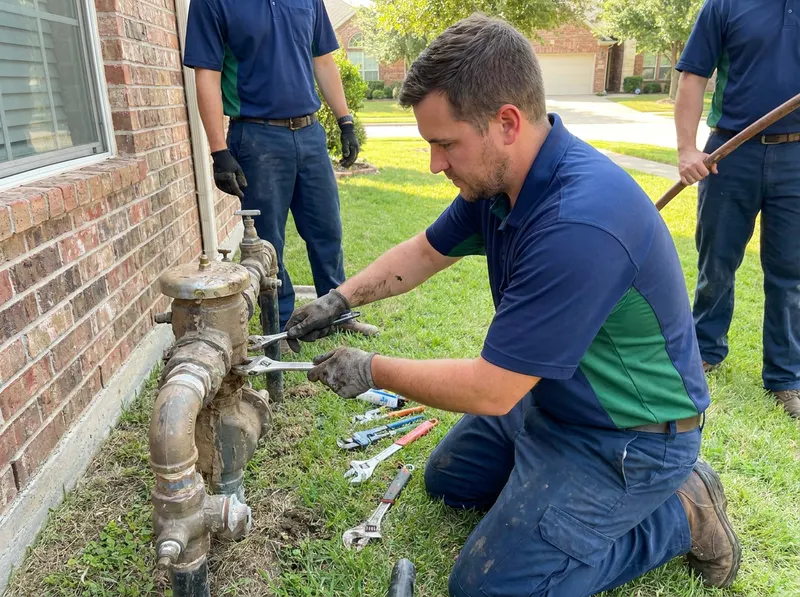
The most common Dallas failure is a freeze split. Backflow assemblies sit above ground on the side of the house, and a January hard freeze, the kind that hits Lakewood and Casa Linda near White Rock Lake every couple of winters, cracks the brass bonnet or the test-cock fitting when water is left inside. A hairline freeze crack shows up in spring as a steady drip or a spray from the top of the device the first time the system runs. Repair here means either a rebuild kit (new poppets, springs, and rubber) for a fixed body, or a full assembly swap when the brass casting itself is split. State rules on backflow devices are set under the Texas Commission on Environmental Quality, and the plumbing side follows the Uniform Plumbing Code cross-connection provisions.
The second failure is age and grit. Dallas water carries fine sediment that wears the internal rubber over 5 to 10 years, so a device that never froze can still fail its check and leak past the seat. The EPA cross-connection control manual" explains why the check must seal, it is the barrier that keeps fertilizer and lawn water out of the potable line the whole neighborhood shares. A worn PVB usually just needs a rebuild kit; a worn double-check that leaks at both checks is often cheaper to replace outright. The USC Foundation for Cross-Connection Control is the group that approves the assembly models installed here, and the American Water Works Association publishes the maintenance standard the trade follows.
For decision guidance: if the device is a pressure vacuum breaker and only the bonnet or poppet cracked, a rebuild kit is the right call, the brass body is intact and the fix costs a fraction of replacement. If a double-check assembly fails its annual test at both checks, or the casting is split from freeze, replacement is the more durable choice because rebuilding a corroded body rarely holds pressure. Homes in Preston Hollow and Kessler Park with 1" assemblies serving large zoned yards lean toward replacement so the device matches the flow; smaller 3/4" systems in the M Streets, Bishop Arts District, and Oak Cliff bungalows are usually good candidates for a kit rebuild.
A repair follows a set sequence. First, the water is shut at the isolation valve and the device is opened. Second, the internals are inspected for the crack, worn rubber, or debris. Third, the correct kit or replacement assembly is installed. Fourth, the system is repressurized and watched for drips at the relief port and test cocks. Note the limits: Dallas Green Sprinkler Repair repairs the assembly and gets it holding, but the annual certification test required by many Dallas County water suppliers is a separate certified test, ask us and we will point you to what your supplier requires. Devices deeper in Vickery Meadow or Lake Highlands on shared lines follow the same rule. Freeze prevention matters most: insulating the assembly before winter, as the Irrigation Association recommends and USDA irrigation guidance" echoes, avoids most repeat cracks. General winter pipe protection tips from Ready.gov winter weather and utility notes from Dallas Water Utilities apply to above-ground backflow devices too.
Every job gets a firm, written price after a free on-site visit.
Tell us about your backflow preventer repair job in Dallas and we'll send a clear, written quote, usually the same day.
 Dallas Green Sprinkler Repair